Quick Answer / Summary
Automatic fish feeders are generally the better choice for established aquariums whose fish eat compatible dry foods. They dispense food on a programmed schedule and offer greater portion control than vacation feeder blocks. Vacation blocks are simpler but release food less predictably and may affect water quality. Neither option is completely hands-off, so testing your feeding method and arranging appropriate aquarium care before traveling are essential.
Key Takeaways
- Automatic feeders provide more control: Most models dispense dry food at scheduled times, although portion sizes can vary.
- Vacation blocks are convenient but less predictable: Food release depends on the product’s formulation and aquarium conditions.
- Water quality matters: Uneaten food from either feeding method can break down and increase waste in the aquarium.
- Your fish’s diet determines the best option: Standard automatic feeders work primarily with dry foods, while specialized diets may require other arrangements.
- Always test before traveling: Check food portions, feeder placement, and equipment operation while you’re still home.
Your aquarium doesn’t know you’re going on vacation. The fish still expect dinner, the filter still has a job to do, and that carefully maintained aquatic environment still needs attention.
So, how do you keep feeding time on track when you’re away?
For fishkeepers in Hoffman Estates, Schaumburg, and throughout Chicagoland, two common options are vacation feeder blocks and automatic fish feeders. Both are designed to provide food without someone standing beside the tank, but their methods and limitations are quite different.
A community aquarium filled with pellet-eating fish may do well with a programmed feeder. A tank housing fish with specialized dietary requirements could need a different approach entirely.
At Aquarium Adventure, we know that successful fishkeeping comes down to understanding the animals in your care. Their diets, feeding behaviors, and aquarium conditions should guide every equipment decision.
Here’s how these two feeding options compare, where each works best, and what to check before you head out.
What Are Vacation Feeders, and How Do They Work?
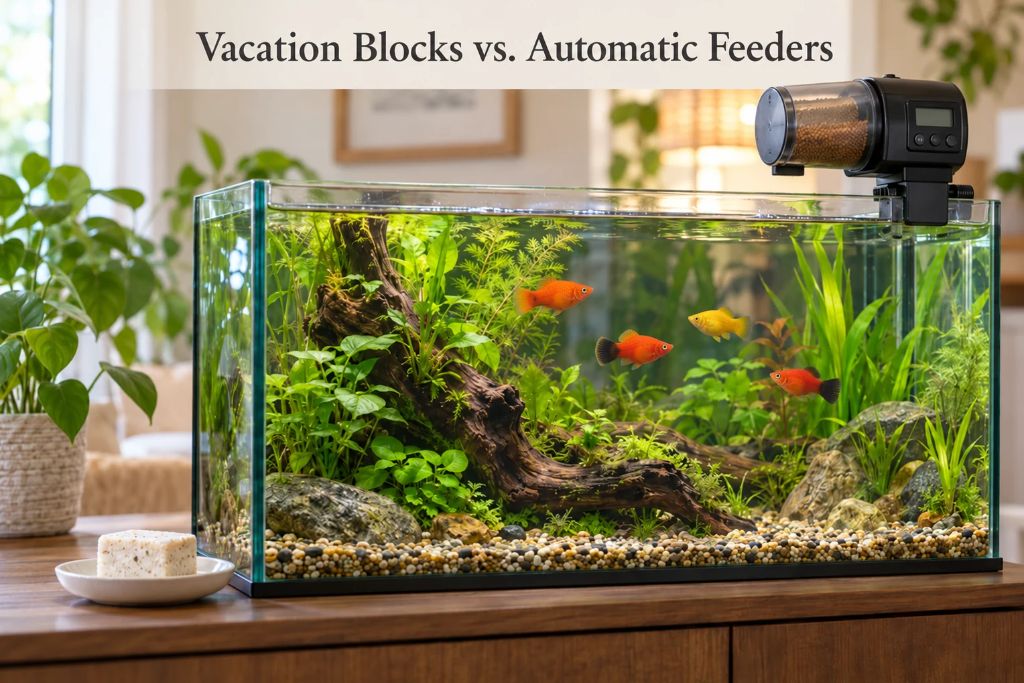
Vacation feeders are slow-release food products designed to make food available over several days.
Traditional vacation blocks contain food embedded in a mineral-based material that gradually dissolves. Gel-based products use a different formulation to release food over time.
Both are designed for convenience, but neither provides the same control over meal timing and portions as a programmable feeder.
What Are the Benefits and Drawbacks of Vacation Feeder Blocks?
Their biggest advantage is simplicity. They generally require no batteries, programming, or additional equipment.
However, there are important limitations:
- Food-release rates can vary with water conditions and product formulation.
- Fish may not consume the released food evenly.
- Uneaten food can break down and affect water quality.
- Some mineral-based products may influence water chemistry as they dissolve.
- The available food may not suit every species’ nutritional needs.
Certain vacation products are formulated for specific fish or feeding behaviors, but suitability should never be assumed.
For a small community aquarium, a compatible block might be worth considering. Still, we’d recommend testing it before relying on it during a trip.
How Do Automatic Fish Feeders Work?
Automatic feeders dispense food at programmed times using a rotating drum, compartment system, or another dispensing mechanism.
Most standard models accommodate dry flakes, pellets, or granules. More specialized feeders can handle smaller portions, particular food types, or advanced aquarium automation.
Why Are Automatic Feeders Often the Better Choice?
Their main advantage is greater control over feeding routines.
- Scheduled feeding: Food is dispensed at programmed times.
- Adjustable portions: Many models allow you to change the dispensing amount.
- Multiple meals: Some devices support several smaller feedings throughout the day.
- Everyday usefulness: Automatic feeders can also help maintain consistent routines when you’re home.
However, a programmed portion isn’t necessarily an exact portion. Pellet size, food shape, and the feeder’s opening can affect how much food is released.
Moisture is another concern. Food can clump inside a dispenser, potentially causing jams or inconsistent feeding.
A properly selected automatic feeder is useful, but it still needs testing and occasional maintenance.
Vacation Feeders vs. Automatic Feeders: What Are the Main Differences?
Here’s how the two options compare for everyday aquarium care.
| Feature | Vacation Feeder Blocks | Automatic Fish Feeders |
|---|---|---|
| How they work | Release food over time through a mineral-based or gel-based formulation. | Dispense food using a programmed mechanical device. |
| Meal timing | Food release depends on the product and aquarium conditions. | Food is dispensed at scheduled times. |
| Portion control | Limited control over how much food becomes available at once. | Usually adjustable, although actual portions can vary. |
| Food compatibility | Limited to the food included in the product. | Most standard models handle compatible dry flakes, pellets, or granules. |
| Setup | Generally requires no batteries or programming. | Requires secure placement, programming, portion testing, and a reliable power source. |
| Main concerns | Unpredictable release, uneaten food, and possible effects on water chemistry. | Moisture, clumping, jams, power issues, and inconsistent portions. |
| Water quality | Uneaten food can decompose and increase waste. | Overdispensed or uneaten food can also decompose and increase waste. |
| Before traveling | Test compatibility, food consumption, and effects on aquarium conditions. | Test several feeding cycles, portions, placement, and equipment operation. |
For most established freshwater and saltwater aquariums that accept pellets or flakes, a tested automatic feeder is usually the more practical choice.
A reef aquarium with fish that require frequent small meals may benefit from a more advanced system. Meanwhile, fish that rely on frozen or live foods may need a specialized feeder or an experienced caretaker.
The right equipment should accommodate the fish, not force the fish into an unsuitable feeding routine.
How Do You Choose the Right Feeder for Your Aquarium?
Start with what your fish already eat and how they behave at feeding time.
A few important questions can narrow your options:
- What foods do your fish need? Confirm that the feeder accommodates their regular diet.
- How often do they eat? Feeding frequency varies by species, age, and nutritional requirements.
- How consistent are the portions? Test the actual amount dispensed rather than relying solely on the device’s settings.
- Where does the food land? Position the feeder so food remains accessible instead of immediately entering an overflow or filter intake.
- Can the food stay dry? Keep the dispenser away from splashing water and excessive humidity.
A feeding ring may help contain floating food, particularly in aquariums where surface circulation carries it toward an overflow.
For fishkeepers around South Barrington and the Poplar Creek area, we recommend observing several complete feeding cycles before traveling.
And if your aquarium includes fish with specialized diets, our guide to live food for aquarium fish offers additional insight into why feeding requirements vary between species.
How Should You Prepare Your Aquarium Before Vacation?
Even the best feeder can’t detect a struggling filter, an equipment malfunction, or a fish behaving unusually.
Before leaving, follow these steps:
- Test the feeder for several days. Check feeding times, portion consistency, and whether the food reaches your fish.
- Inspect the power source and placement. Replace weak batteries when appropriate, secure the device, and keep it away from splashing water.
- Check aquarium conditions. Test relevant water parameters and confirm that temperature, filtration, and circulation are appropriate.
- Complete routine maintenance in advance. Address existing problems without introducing unnecessary last-minute changes.
- Prepare a caretaker. For longer absences, arrange check-ins and provide written instructions, emergency contacts, and premeasured food if needed.
At Aquarium Adventure, we also offer aquarium maintenance and service options for homeowners who want professional help caring for their aquatic environments.
A reliable feeding routine is important. Keeping the rest of the aquarium stable is just as essential.
Frequently Asked Questions About Vacation and Automatic Fish Feeders
Are Automatic Fish Feeders Better Than Vacation Blocks?
For most established aquariums whose fish eat compatible dry foods, automatic feeders are generally the better option. They offer scheduled dispensing and greater control over food quantities.
However, their performance depends on correct setup, compatible food, and proper maintenance. Vacation blocks may be suitable for certain tanks, but their food-release rates are less predictable.
Neither method guarantees that every fish receives an appropriate meal, so observing the feeding process before traveling is important.
Can Vacation Feeder Blocks Affect Aquarium Water Quality?
Yes. Some vacation blocks can contribute to cloudy water or changes in water chemistry, depending on their formulation and aquarium conditions.
Uneaten food may also decompose, increasing the waste that the aquarium’s biological filtration must process.
Not every vacation product behaves the same way. Mineral-based and gel-based formulations differ, so review the manufacturer’s instructions carefully. Testing a product while you’re home helps you evaluate how it performs in your particular aquarium.
How Long Can Aquarium Fish Go Without Food?
There is no single safe fasting period for every aquarium fish.
Some healthy adult fish can tolerate a short interruption in feeding, while fry, growing fish, ill fish, and species with frequent feeding requirements may be less tolerant.
Diet, age, species, and health all influence nutritional needs. Rather than assuming your fish can go several days without eating, consult an aquatic veterinarian or knowledgeable aquarium professional about their specific requirements before traveling.
Can Automatic Feeders Dispense Frozen or Live Fish Food?
Most standard automatic feeders are designed for dry foods such as flakes, pellets, and granules.
Specialized refrigerated or frozen-food systems are available, but they require appropriate equipment and maintenance. Live foods present additional storage and dispensing considerations.
If your fish depend on frozen or live foods, a conventional drum feeder may not provide suitable nutrition. An experienced caretaker or purpose-built feeding system may be necessary to maintain their usual diet.
Should Someone Check Your Aquarium While You’re Away?
For longer trips, a trusted caretaker provides an important extra layer of protection.
Even a properly functioning feeder cannot identify abnormal swimming behavior, equipment failures, or deteriorating water conditions. Someone familiar with your aquarium can check the fish, confirm that essential equipment is operating, and contact you if something needs attention.
Provide clear instructions and premeasured food when manual feeding is required. This helps prevent well-intentioned overfeeding.
Which Feeding Option Makes the Most Sense?
Automatic feeders generally offer better control for aquariums with compatible dry-food diets. Vacation blocks are simpler, but their less predictable food release makes careful evaluation important.
The best choice is the one that supports your fish’s nutritional needs without compromising the aquarium environment you’ve worked to maintain.
Let Aquarium Adventure Help You Feed With Confidence
At Aquarium Adventure, we help fishkeepers throughout Hoffman Estates and the surrounding Chicagoland communities make informed choices about fish nutrition, equipment, and aquarium care.
From a peaceful freshwater community tank to a more specialized saltwater setup, our team can help you consider the feeding options that make sense for your fish.
Planning a getaway or looking to improve your everyday feeding routine? Explore our aquarium supplies and services or contact our Hoffman Estates team for guidance tailored to your aquarium.