
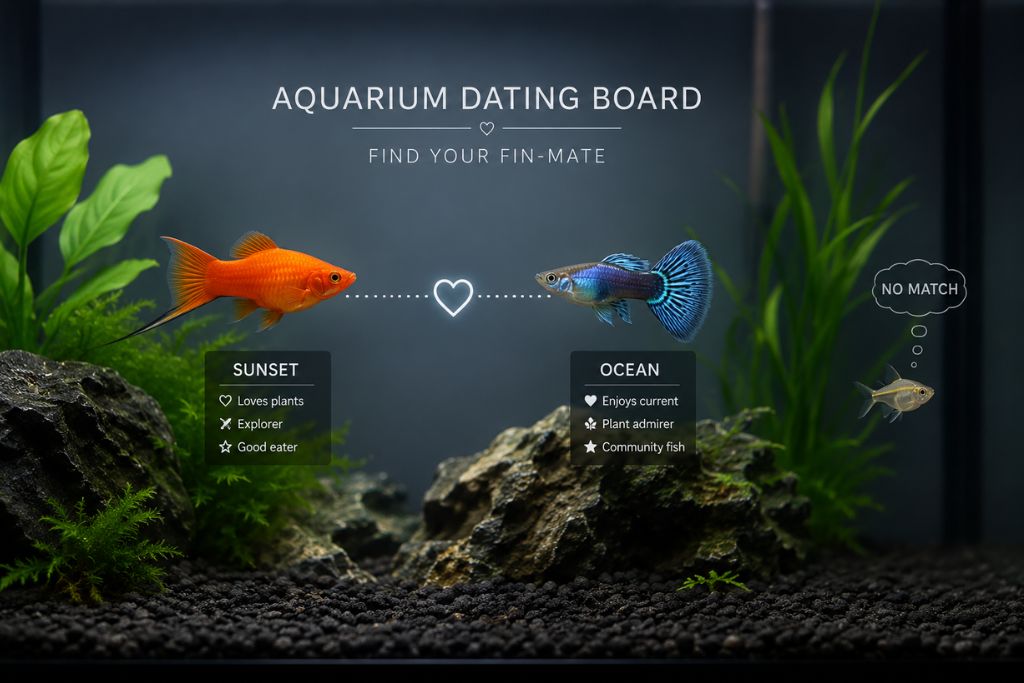
So you have an aquarium. Naturally, you start shopping for fish. Then you see a neon tetra. Then a gourami. Then a gorgeous angelfish. Suddenly, your original stocking plan has left the building.
Hold up. Not every fish makes a good roommate. Fish compatibility depends on temperament, adult size, water conditions, space, and behavior.
That matters whether you are planning a community tank in Hoffman Estates or building a colorful setup in Bolingbrook.
Why Can’t Every Fish Just Be Friends?
Fish have preferences. Strong ones.
Some are peaceful community swimmers. Others are territorial. Some need a group of their own kind. Others may see a smaller tankmate as lunch.
Tank size matters, too. Crowded fish are more likely to become stressed and quarrel. Décor also helps by creating territories and hiding places.
So before you add that “one last fish” to your Schaumburg aquarium, let’s play matchmaker.
Which Fish Make Good Community Tank Matches?
Neon tetras + corydoras: A classic peaceful pairing. Tetras occupy the open water, while corydoras spend their time lower in the aquarium. Both need appropriate water conditions and enough room for their social groups.
Guppies + platies: These peaceful livebearers can work nicely together in a properly sized community aquarium. Just remember that livebearers reproduce. Quickly. Your cute little family reunion can become a very busy aquarium.
Rasboras + peaceful tetras: Another community-friendly combination. These schooling fish can share an aquarium when their temperature, water chemistry, size, and space requirements overlap.
Corydoras + peaceful community fish: Corydoras generally make excellent community residents. They still need appropriate substrate, water conditions, and companionship from their own species.
Tiger barbs + long-finned fish: Hard pass. Tiger barbs can nip fins, making slow-moving, long-finned fish poor roommates.
Goldfish + tropical community fish: Another mismatch. Goldfish have different temperature requirements and should not simply be dropped into a tropical community aquarium.
Angelfish + tiny fish: Proceed carefully. Angelfish become larger and can prey on sufficiently small tankmates. Adult size matters far more than the cute little fish you see at the store.
What’s the Best Way to Choose Tankmates?
We recommend checking five things before buying anything:
- Temperament
- Adult size
- Temperature and water requirements
- Tank size and swimming space
- Schooling, territorial, or social needs
Then watch the actual fish. Individual personalities can surprise us. A combination that looks perfect on paper can still fail inside the aquarium.
That’s why we love helping aquarists around Hoffman Estates, Bolingbrook, Bartlett, and South Barrington think through the whole community before bringing anyone home.
Ready to Build Your Fish’s Social Circle?
At Aquarium Adventure, we work with 1,000 species across 450 aquariums and 20,000 gallons of water. That gives us plenty of experience with fish that play nicely together… and fish that absolutely did not get the memo.
Our goal is simple: help you create an aquarium where every resident has the space, conditions, and compatible neighbors it needs to thrive.
So go ahead and admire every fish in the room. Just don’t let the prettiest one make your stocking decisions for you.